MINUTES
51st Meeting of the Expert Panel on Social, Environmental and Economic Performance of Cotton Production – SEEP
Sunday, December 1, 2019
Brisbane – Australia
Members:
Mr. Allan Williams, CRDC (Chair)
Mr. Bruno Bachelier, CIRAD (Vice-Chair)
Mr. Kater Hake, USA
Ms. Elke Hortmeyer, EU
Mr. Jean Paul Guinko, Burkina Faso
Mr. Alan McClay, EU
Mr. Ta Dolphin Yu, Taiwan
Observers:
Ms. Francesca Mancini, Delta Project Consultant
Mr. Wolfgang Bertenbreiter, GIZ
Ms. Belinda Edmonds, African Cotton Foundation-AFC
Mr. Jean Paul Gourlot, CIRAD
Mr. Steven Chen, Taiwan
Mr. João Luis Pessa, ABRAPA
Mr. Patrick Packnett, USDA
Ms. Susan Maas, CRDC
Mr. Peter Wakefield, WIS
Mr. Neal Gillen, Representative of the ICAC Secretariat
Mr. Michel Fok, CIRAD
Mr. Damien Sanfilippo, BCI (by Teleconference)
Secretariat:
Mr. Kai Hughes, ICAC Executive Director
Mr. Keshav Kranthi, Head of TIS
Ms. Lihan Wei, Statistician
Ms. Lorena Ruiz, Economist
1. Adoption of the Agenda
Allan Williams, Chair of the SEEP panel opened the meeting by welcoming the delegates and observers present and asked all attendees to present themselves. Mr. Williams noted that the focus of the meeting was to review and endorse the field testing of a set of impact indicators developed by the Delta Project (Annex 1 – Delta Project brief).
2. The DELTA Project Overview
Delta Project Presentation video: https://www.youtube.com/watch?v=e4l15-1AKfE
Dr. Francesca Mancini, sustainability consultant to the Delta Project, started her presentation by noting that the Delta Project is a cross-commodity project, including cotton and coffee, aiming to align sustainability measurement and reporting at farm level. The project is a collaboration between the Better Cotton Initiative (BCI), the Global Coffee Platform (GCP), the International Cotton Advisory Committee (ICAC) and the International Coffee Association (ICO). The three-year project (2019-2021) is funded by the ISEAL Innovation Fund.
The value proposition of the project is to foster a common understanding of what is sustainability in the cotton and coffee sectors, measuring sustainability through a common set of environmental, social, and economic indicators, and providing feedback of the analysis of the data to farmers to ensure better decision making, improved services and access to finance.
The project has three components:
- Develop a sustainability framework: impact indicators, guiding principles and data standardization.
- Link sustainability performance to business actors and governments: method and guidance.
- Add value to producers: pilot test in two countries with farmers and extension officers. (South Africa for cotton and Vietnam for coffee).
Dr. Mancini noted that the development of a common set of cross-commodity output and outcome indicators should consider the following components: it has to be at the farm-level, it needs to show the impact/outcome/output on sustainability, the number of indicators should be manageable (limited to 10-15), and they need to be relevant in terms of measuring the sustainability progress and adaptable to other sectors. It also requires the development of guidelines that support claims from the sustainability information generated through the common set of indicators and how to communicate sustainability information to customers and end-consumers.
The project is using four different sources to identify the final set of indicators:
- Sustainable Development Goals (SDGs) indicators
- ISEAL Common core indicators
- ICAC/SEEP/FAO indicators for cotton as published in 2015
- Global Coffee Data Standard developed by the Global Coffee Platform (GCP) for coffee
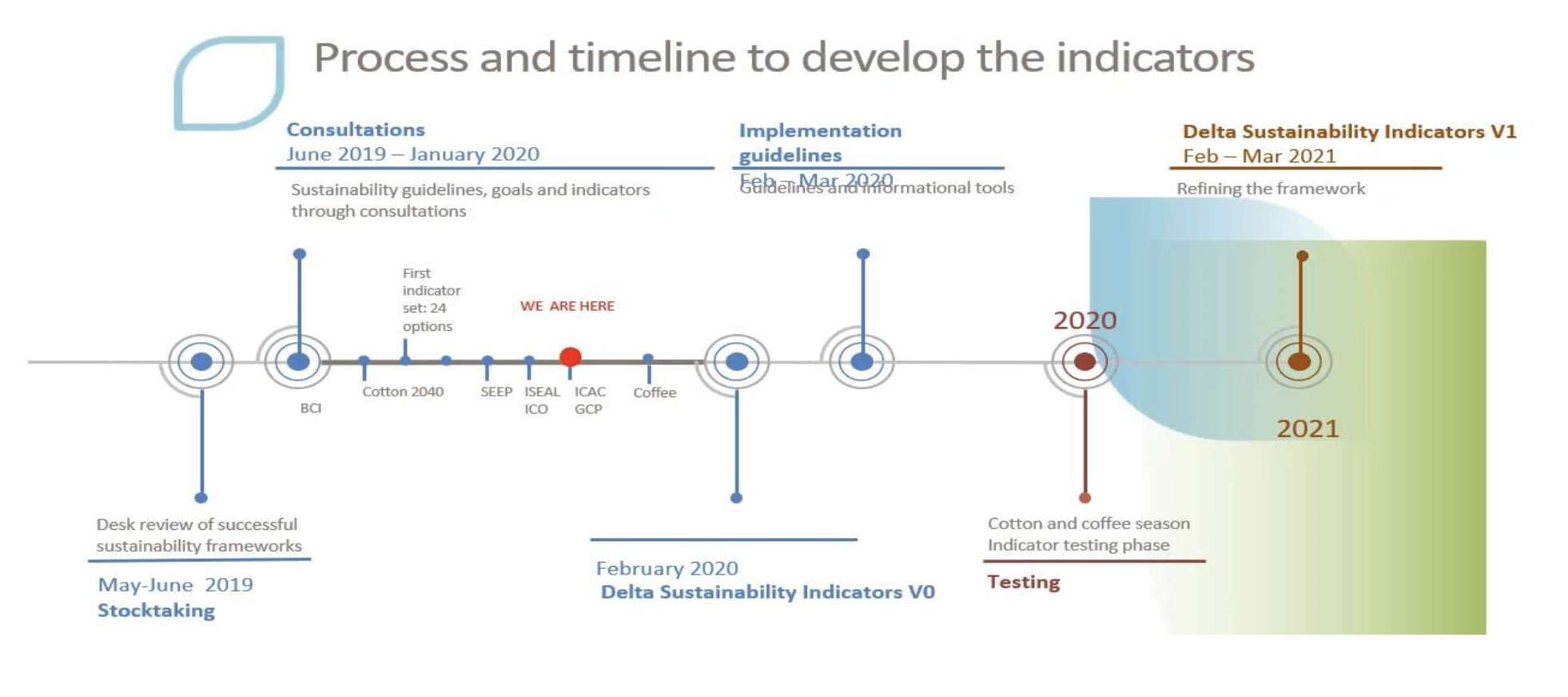
Dr. Mancini mentioned that the pilot (field) testing of the indicators in the first two countries will be led by BCI and the GCP respectively in 2020. After the field testing, the indicators will be refined.
Consultation with various cotton standards and retailers (CmiA, Fairtrade, Textile Exchange, Cotton Connect, OCA, C&A Foundation, my BMP, Cotton Australia, Cotton 2040), UN Agencies (FAO, ILO, WHO), and public and research organizations members of SEEP among other stakeholders, has taken place or is planned.
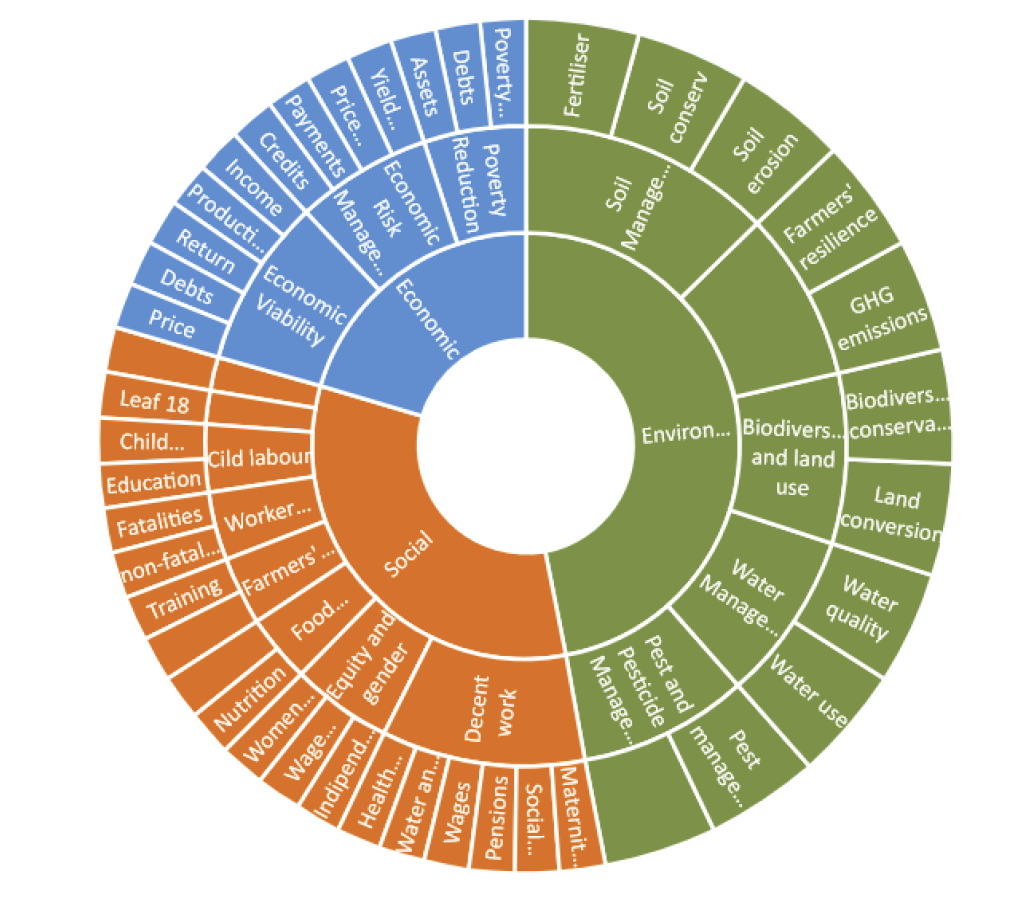
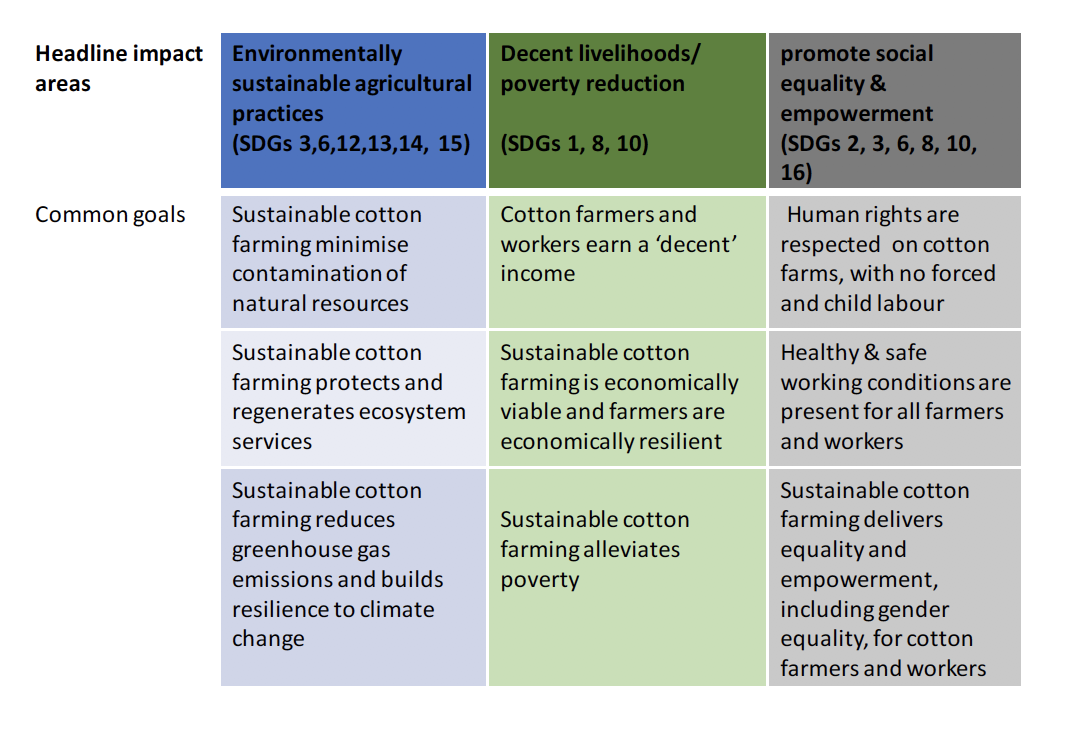
Fifteen major sustainability impact areas for cotton and coffee have been defined, as well as 38 sub-areas. Dr. Mancini pointed out that the mapping helped the cotton 20401 initiative to define common broad sustainability goals for the cotton sector.
3. Refining and finalization the draft Core Set of Indicators
The Chair solicited the panel’s feedback after the presentation of each proposed indicator to keep the discussion ongoing within the timeframe of the meeting. Dr. Mancini provided a printed copy to all participants and proceeded to read them one by one.
1. Indicator #1. Use of highly hazardous pesticides-HHPs: The unit for this indicator is kilograms of active ingredient of each highly hazardous pesticide per hectare.
Comments from Participants
– Francesca Mancini: mentioned that all the cotton sustainability standards fully support this indicator. The next step would be developing a list of HHPs not recommended for use on cotton. She also noted that the FAO and the WHO have published the International Code of Conduct on Pesticide Management and eight defined criteria and guidelines on HHPs.
– Kater Hake: asked if a national authority of a country could have the ability to remove a product from the HHPs list. He provided the example of glyphosate which has strong support in the U.S but does not in some other countries. Dr. Mancini answered that as of today, glyphosate is not GHS 1A/1B as per the criteria defined by the FAO/WHO, but there are indications that it might be in the future because of the issue around carcinogenicity. She also noted that FAO has not developed a global list of HHPs. Nevertheless, other international organizations such as the Pesticide Action Network-PAN and CropLife have developed their HHPs list.
– Allan Williams: noted that at this stage of the project, reporting on HHPs doesn’t mean setting a target of zero use and it is part of a different discussion.
– Francesca Mancini: proposed to create an open list of HHPs products for cotton based on FAO/WHO criteria.
– Joao Luis Pessa: noted that in order to reduce the adverse effects of pesticide use in cotton farming, farmers should have access to safer alternatives. Singling out or banning one product won’t solve the problem for the cotton farmer.
It was agreed that a working group to revise, define and propose a list of HHPs based on FAO/WHO criteria for this indicator will be formed. It is also important to provide guidance on the methodology to collect information on pesticide active ingredient. The members of the working group are:
- Francesca Mancini, Sustainability consultant
- Susan Maas, CRDC
- Marcelo Paytas, INTA
- Keshav Kranthi/Lorena Ruiz, ICAC
- Alexandre Pedro Schenkel, AMPA
- Jean-Pierre Guinko, Burkina Faso
- Damien Sanfilippo, BCI
2. Indicator #2. Pesticide risk‐based indicator
Comments from Participants
– Francesca Mancini: noted that currently there are two risk assessment indicators in use by the Delta Project partners – the Environmental Toxic Load and the Toxic Load Indicator. Pesticide use by type remains the default indicator until a decision on the risk‐based indicator is reached.
– Allan Williams: commented that traditionally pesticide use has been reported on by providing the amount of kg of the active ingredient used, but it doesn’t give any information on the impact of that use. He noted that the challenge faced by the panel is that the closer you want to get to assessing the actual risk, the more difficult the data collection becomes. Designing a good indicator could be possible in theory but in practice, it could be unworkable, as it would require so many data points that getting the data to actually populate the indicator won’t be feasible.
– Damien Sanfilippo: mentioned that BCI can provide further documentation and clarification on the use of the Toxic Load Indicator (TLI). This indicator was developed in conjunction with CmiA, and it fits best with the purpose and context of both organizations. He noted the TLI is very simple to use. It is an open source system as it only relies on parameters that are universally available. The maintenance of the system is also very easy and fully transparent.
– Kater Hake: pointed out that risk issues are really important one to include because that gives you impact. Risk is equal to toxicity times exposure. Farmers have put some practices in place to minimize their exposure and reduce the risk. If a risk indicator is going to be added the panel should consider that the risk is to humans and not another target species.
– Keshav Kranthi: stated that in the U.S, there are more than 20,000 cases that have been registered in courts against the use of glyphosate. Currently, in at least three cases, the juries have found Roundup (glyphosate-based weed killer) to be carcinogenic. Dr. Kranthi noted that despite the U.S doesn’t consider glyphosate a risk to public health when used in accordance with its current label, all these cases have been filed within the country and not in countries like India, Pakistan or African Countries. He also said that the problem is not how farmers use or handle HHP, but the danger of the products per se.
The panel agreed that the concept of a composite risk indicator is important. The actual focus of the indicator – humans and/or bees – needs further discussion and considerations. The working group on HHPs will discuss and revise the best option for this indicator as well.
3. Indicator #3. Water use or water use efficiency
Comments from Participants
– Francesca Mancini: noted that considering the challenges in calculating water use in small holdings, there is a need to make a final decision on the most suitable water indicator for farms that do not keep regular water use records. There are currently three indicators available – Water efficiency for irrigated farms (%), quantity of water used for irrigation (m3/ha), and water crop productivity (WCP) for irrigated farms (m3/kg lint). Dr. Mancini pointed out that water indicators are highly context-dependent as they are not very meaningful unless more information about how and where the water is being applied is provided.
– Allan Williams: mentioned that both quantity and water crop productivity have been widely supported by the Cotton 2040 initiative.
– Keshav Kranthi: asked if water crop productivity includes blue water, grey water and green water. Mr. Williams answered that water efficiency is determine by the amount of water that reaches the plant once it is extracted from underground, dam or river. While water productivity is how much cotton is produced per unit of water delivered to the plant. Dr. Kranthi pointed out that it is always better to focus on irrigation water because that is where farmers can have a handle. Adding rainfed water to the analysis may confuse people and it could lead to a misinterpretation of the data collected. Mr. Williams replied by saying that the panel should consider the opportunity for looking at water productivity in a rainfed system as well.
– Kater Hake: mentioned that the metrics for intercrop water productivity is the water used by the crop versus productivity of the crop. Dr. Hake said this is a very important metric because allow farmers to get maximum yield value from the limited water they have available.
The panel agreed that water management in rainfed systems needs further discussion and it cannot reach an agreement on this matter at this point. The current indicators that are part of the discussion are:
- Total water use
- Water use efficiency
- Crop productivity for irrigated farms
- And one indicator on water stewardship
4. Indicator #5. Topsoil carbon content and moisture content
Comments from Participants
– Allan Williams: asked for a clarification for these two terms. Dr. Mancini replied by saying that the terminology was proposed by the coffee organization.
The panel agreed that topsoil carbon content should be measured every year using a visual assessment and every 5/6 years in the laboratory, and that the adoption of good soil management practices should be monitored regularly. The panel recommended that the guidelines for data collection from the Global Soil Partnership be used as a reference.
5. Indicator #6. Fertiliser use or fertiliser use efficiency
Comments from Participants
– Kater Hake: mentioned that since we have two metrics – the productivity or yield of seed cotton and fertiliser use, it is extremely easy to put those metrics together by calculating nutrient extraction versus supply.
– Keshav Kranthi: supported the idea and noted that it is better to focus on fertilizer use efficiency rather than application.
The panel agreed that fertilizer use will be included as indicator, and that this indicator will be replaced in future by fertilizer use efficiency.
6. Indicator #7. Forest converted for cotton production
Comments from Participants
– Francesca Mancini: mentioned that based on the consultation with all the stakeholders, forest, wetland and grassland conversation should be included. However, there is a need to define the cut-off date. Is it going to be retrospective or not?
– Allan Williams: commented that it is important to understand how other organizations deal with this issue in order to provide recommendations to the project.
– Lorena Ruiz: asked what the methods of data collection were. Mr. Sanfilippo replied that BCI works with the producers that are participating with the program and conducts a survey where the farmer has to inform if there is planning to do any land conversion and if they do then there is a process implemented to monitor it.
The Panel recommended not to set a cut-off day but looks forward to mitigate any possible risk where High Conservation Value Areas (HCVA) are converted for the purpose of growing cotton. Francesca Mancini will distribute further information to the panel on this matter.
7. Indicator #8. Green House Gas emission: kg CO2e / kg cotton lint
Comments from Participants
– Francesca Mancini: initiated the discussion on a common methodology to assess emissions. She pointed out for the need to develop appropriate guidance to annex to the Delta framework. Common protocol for sources of emissions, system boundary, and emission factors have to be discussed by the panel.
– Keshav Kranthi: asked if the idea was to measure the carbon footprint or the carbon emissions. If it is about addressing the issue of carbon emission, then it is essentially a matter of balance of input and output. Allan Williams replied that in Australia the initial mission was to measure emissions but then it was decided to included sequestration as well. However, it hasn’t been decided what would be the best methodology to measure it. Keshav Kranthi asked if there were any study that provides
the net emission of CO2 by cotton. Mr. Hake responded that the global life cycle assessment of cotton shows that up until the bale, cotton is a net absorber of CO2.
The panel agreed that the indicator will focus on measuring emissions in the cotton production process until ginning, i.e. to the bale of lint. It was also agreed that a working group will be formed to gather information on the CO2eq calculation tools currently in use in the countries or standards.
8. Indicator, #9, #10, #11 and #12: Average yields, net income, living income, price at farmgate.
Comments from Participants
– Keshav Kranthi/Lorena Ruiz: noted that there is a difference between cost of cultivation and cost of production. The first one goes until the seed cotton and it reflects the cost per hectare. The cost of production refers to the lint and includes the cost of ginning, land rent and taxes. The gross income refers to the income of a farmer including lint and seed, and net returns is equal to gross income minus the cost of cultivation.
The panel agreed that the cost of cultivation (up to the seed cotton) should be collected in local currencies. The unit where cost of cultivation would be reported would be U.S dollars so comparisons can be made. The frequency for reporting on economic indicators could be every three years, following the recommendations from the SDGs. ICAC will share their methodology for data collection on cost of production.
9. Indicator #13. Child labour: Incidence of the worst forms of child labour and forced labour
Comments from Participants
– Francesca Mancini: mentioned that there is a shared concern on how monitoring and reporting child labour is done.
– Kai Hughes: noted that any child labor in a cotton system should be considered not sustainable at all.
– Alan McClay: indicated that BCI classifies the cases into two categories – systemic and incidental. For social indicators there should be an agreement between principles and standards. A probable way to move forward is to measure what it is seen in the field.
– All Participants: members noted that there should be a more active role from countries that allows the discussion and set targets to curve the use of HHPs, child and force labour, and guarantee minimum wages in cotton producing countries.
The panel agreed that definitions and guidance from the International Labour Organization (ILO) should be used to address the issue of child and forced labour.
10. Indicator #15. Gender: Women in managerial/leadership roles and other relevant decision-making influence
Comments from Participants
– Francesca Mancini: noted that there is a need to further define the indicator and proposal to adopt and modify the gender index developed by IFPRI which has 15 gender dimensions, 6 out of which are very relevant to cotton production.
– Alan McClay: commented that BCI undertook research on gender dynamics in cotton production and the organization is putting together a plan to roll out a global gender strategy for cotton production.
Definition of units across the indicators
- Harvested land
- Lint Yield
- Cost of cultivation per hectare and cost of production per kilogram of seed-cotton
- Local currencies vs USD
- Harvest year
4. Draft report statement to report to plenary meeting
A statement on SEEP’s recommendations to endorse the indicator set for testing in 2020 will be drafted by Allan Williams and Francesca Mancini and sent out to members for revision and approval.
5. Cotton 2040
The chairman noted that the Cotton2040 initiative asked that the SEEP panel should consider their comments on the set of indicators. In order to do provide a proper answer, he suggested that Francesca Mancini provides a document that summarizes and incorporates all the observations given by the panel. This document will be distributed among members along with the minutes from the meeting. The chair will formally reply to the cotton 2040 initiative and acknowledge their work.
6. Other matters
The Chair thanked delegates and observers for their presence and declared the meeting closed.
The meeting was adjourned at 12:30 p.m.
 Dr Mansurbek Muminov is a senior scientist at the Scientific Research Institute of Fiber Crops in Uzbekistan. His efforts have focused on basic cotton ginning and spinning, and he has authored more than 10 comprehensive research papers in those areas.
 Dr. Keshav R. Kranthi, Ph.D is the Chief Scientist at the International Cotton Advisory Committee (ICAC), Washington, DC. Before joining the ICAC, he served as the Director of the Central Institute for Cotton Research (CICR) in Nagpur, India, from 2008 to 2017. Dr. Kranthi has thirty-five years of experience as a cotton scientist. He received a gold medal in his Ph.D. in 1991 and has been honored with more than a dozen awards, including the Best CPP Program Award for Research Leadership by the Renewable Natural Resources Research International, UK; the ICAC Researcher of the Year Award in 2009; the Vasantrao Naik Smruti Pratisthan Award in 2004; the ICAR National Award for Leader of Best Team Research in 2006; Fellow of the National Academy of Agricultural Sciences in 2009; the ISCI Recognition Award in 2010; Krishi Gaurav Award in 2010; Bhumi Nirman Award in 2011; ISCI Fellow in 2017; the Plant Protection Recognition Award in 2016 by the National Academy of Agricultural Sciences; Suresh Kotak Global Cotton Award in 2023 and the CRDA life time achievement Award in 2024. Dr. Kranthi has four patents granted in South Africa, Mexico, China, and Uzbekistan, and six patent applications in India. He has published more than 100 peer-reviewed research papers, 20 books/handbooks/manuals, 17 book chapters, and more than 50 popular articles. Dr. Kranthi has presented invited talks and conducted training sessions in more than 40 countries. His research citations are in excess of 6,500. As the chief principal investigator, he coordinated and led more than 35 externally funded international collaboration research projects.
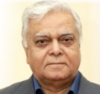 Dr. Charudatta Mayee, Ph.D is a distinguished Indian agricultural scientist and administrator with over five decades of contributions to Indian agriculture. Dr. Mayee currently serves as Adjunct Professor at IARI, New Delhi, and several ICAR institutions and universities. Dr Mayee served as Vice Chancellor of MAU Parbhani, Director of the Central Institute for Cotton Research (ICAR-CICR), Nagpur, and Agriculture Commissioner for the Government of India. Dr Mayee served as Vice President of the National Academy of Agricultural Sciences (NAAS) India. Dr. C.D. Mayee has received numerous accolades spanning five decades, recognizing his transformative contributions to agricultural science. He is an Alexander von Humboldt Fellow and has received lifetime achievement awards from multiple institutions. His early career was marked by the Prof. M.J. Narasimhan Academic Award (1974) and V.P. Gokhale Award (1998), followed by national honors like the Vasantrao Naik Krishi Award (2002), ICAR Outstanding Team Research Award (2003), and Dr. B. Vishwanath Award (2005). He received Lifetime Achievement Awards from the Indian Society for Cotton Improvement (2008), National Academy of Agricultural Sciences (2011), and Indian Phytopathological Society (2017), among others. Four universities conferred Honorary Doctorates (D.Sc.) for his pioneering work (2009–2023). Recent distinctions include the Best Cotton Scientist Award (2022, Cotton Association of India), Krishi Maharshi for Cotton R&D (2024) and the winner of the ICAC Researcher of the Year Award 2025.
 Dr. Khalid Mahmood is the Co-Founder of SAWiE, where he has been instrumental in developing digital farm advisory and farm data platforms supporting over 10,000 farmers in Pakistan, improving traceability and transparency across agricultural supply chains. He is leading the development of first-mile traceability systems and the TRUE Cotton platform, connecting farmers with sustainable global textile supply chains.
 Dr Olivier Zieschank studied Management at the university of Lausanne, where he graduated in 2005. Until 2010, he worked in a Swiss-based start-up that specialized in negotiating cell tower lease agreements, where he became associate director. In 2010, he returned to university and studied applied economics in Neuchatel, Switzerland. He wrote his PhD in Economics at the University of Freiberg, Germany, where he developed a theory of organization. Mr Zieschank was appointed Economist at the ITMF in August 2017 and became director in January 2021.
 Ashwin Chandran holds a Bachelors Degree in Textile Technology from UMIST, UK and a Masters degree in Business Administration from the University of Illinois, USA.
 Mr. Shreyans Gupta is an officer of the Indian Revenue Service (IRS), currently serving as First Secretary at the Embassy of India in Washington D.C. In his current role, he oversees critical portfolios within the Income-tax Overseas Unit (ITOU) and the Commerce Wing, facilitating bilateral and multilateral cooperation.
 Eric Trachtenberg is the Executive Director of the International Cotton Advisory Committee (ICAC).
 Pia Terasa joined the textile machinery manufacturer Saurer over 25 years ago. She is responsible for marketing and communications at the group level. Coming originally from a non-textile background, market intelligence and business development have played major roles throughout her career. Her current main “hobby” is closely monitoring development of the textile recycling industry and circular economy.
 Dr. Md. Fakhre Alam Ibne Tabib is the former Executive Director of the Cotton Development Board of Bangladesh, with over 32 years of experience in cotton production, research, and development. He has demonstrated strong leadership and communication skills in engaging with national and international stakeholders in the cotton sector.
 Dr. Elsie Sia Kanza is the current Ambassador Extraordinary and Plenipotentiary of the United Republic of Tanzania to the United States of America and Mexico. Prior to that role, Ambassador Kanza served as Special Advisor to the President of the World Economic Forum, and, before that, Head of Africa and Member of Executive Committee for 10 years championing growth and development in Africa leveraging public private collaboration. In 2015, She was awarded a Doctorate in Business Administration (honoris causa) by the University of Strathclyde for the transformative impact achieved in Africa.
 Alison Ward has over 30 years of international experience in sustainability and corporate affairs. Alison is the CEO of CottonConnect, where she leads a team of over 100 employees, impacting the lives of over 800,000 cotton farmers in India, China, Pakistan, Turkey, Egypt and Bangladesh. Under Alison’s leadership the organization: drives supply chain transparency connecting sustainable fibres from farm to store; focuses on the rights and skills of women in supply chains through pioneering gender programmes; and continues to develop innovations at a farm level. She leads cotton strategies and programmes for global brands and retailers.


 Name: Mary Concilia Anchang
 Besim Özek
 SIDDHARTHA RAJAGOPAL, Executive Director – TEXPROCIL