
Technical Seminars Papers on Biotechnology
Technical Seminars Papers on Biotechnology
 2014 – Role of Genetic and Genetic Engineering in Optimizing Input Use
Mahboob-ur-Rahman, ICAC Researcher of the Year 2014, Pakistan
2013 – Round Table for Biotechnology in Cotton: Executive Summary of the ReportKeith Menchey, Chairman of the Round Table for Biotechnology in Cotton, USA
2013 – Role of Genomic Studies in Boosting Yield
Ibrokhim Y. Abdurakhmonov, ICAC Cotton Researcher of the Year 2013, Uzbekistan
2011 – Role of Biotechnology in Sustainable Development of Cotton (364.74 KB)Sukumar Saha, ICAC Cotton Researcher of the Year 2011, India
2009 – Challenges and Opportunities in Cotton Production Research (223.52 KB)
Keshav Raj Kranthi, ICAC Cotton Researcher of the Year 2009, India
2009 – Improving Confidence in Biotech Cotton (895.01 KB)
Jocelyn Webster, AfricaBio, South Africa
2009 – Market Response to Biotech Cotton Seed (321.88 KB)
Amadeo Nicora, Instituto Nacional de Technologia Agropeucaria (INTA), Argentina
2009 – Biotech Cotton in International Trade (349.01 KB)
Richard Haire, Queensland Cotton Corporation Ltd., Australia
2009 – Regulatory Requirements and Technology Diffusion: The Case of Biotech Cotton (328.24 KB)
Idah Sithole-Niang, University of Zimbabwe, Zimbabwe
2009 – The Biotechnology Regulation System in South Africa (576.38 KB)
Gillian Christians, Registrar GMO Act, Department of Agriculture, South Africa
2006 – The International Cotton Genome Initiative (ICGI): Its Origin, Mission and Development (203.40 KB)
Russell J. Kohel, ICGI Chair, USDA-ARS, College Station, TX, USA
2006 – Prospects of Biotech Cotton in Brazil (307.72 KB)
Edison Paiva, Brazilian Agricultural Research Corporation (EMBRAPA), Brazil
2006 – The Role of Biotechnology in Improving the Sustainability of Cotton (435.34 KB)
Roy G. Cantrell, Vice President, Agricultural Research Division, Cotton Incorporated, USA
2004 – Nine Years of Transgenic Cotton in Mexico (248.83 KB)
Jose L. Martinez-Carrillo, National Institute for Forestry, Agriculture and Livestock Research (INIFAP), Mexico
2004 – Why Fear Biotechnology? (238.25 KB)
Lastus K. Serunjogi, National Agricultural Research Organization (NARO), Uganda
2004 – Multiple Uses of Biotechnology (131.46 KB)
Kater Hake, Delta and Pine Land Company, USA
2004 – Bt Cotton in India: The Technology Wins as the Controversy Wanes (243.39 KB)
T. M. Manjunath, AgriBiotech, India
2002 – Impact of Transgenic Cotton on the International Trade (140.00 KB)
Neal P. Gillen, American Cotton Shippers Association, USA
2002 – Current Status and Prospects of Transgenic Egyptian Cotton (113.44 KB)
Osama Ahmed Momtaz, Agricultural Genetic Engineering Institute, Egypt
1995
Field Performance of Bt Cotton (38K)
Tom J. Wofford and Thomas Luehder, Delta and Pine Land Company, USA
1997
Cotton Leaf Curl Virus Epidemic in Pakistan: Virus Characterization, Diagnosis and Development of Virus Resistant Cotton Through Genetic Engineering (174K)
Yusuf Zafar, A. Bashir, S. Mansoor, M. Saeed, S. Asad, N. A. Saeed, R. Bridden, and K. A. Malik, National Institute for Genetic Engineering and Biotechnology, Pakistan.
P. G. Markham, John Annes Centre, UK.
C. M. Fauquet, The Scripps Research Institute, USA.
Global Diversity and Distribution of Cotton-Infecting Geminiviruses: An Essential Requisite to Developing Sustainable Disease Resistance (163K)
Judith K. Brown, University of Arizona, USA.
1998
Brief Overview of Cotton Biotechnology (219K)
James McD Stewart, University of Arkansas, USA.
Osama Ahmed Momtaz, Agricultural Genetic Engineering Research Institute, Egypt.
2000
A Future for IPM in Cotton: The Challenge of Integrating New Tools to Minimize Pesticide Dependence (37K)
Gary P. Fitt, Australian Cotton Cooperative Research Center, Australia.
Genetically Modified Cottons—Costs and Expectations (41K)
Dave Anthony, Auscott Limited, Australia.
The Role of Biotechnology in Cotton (5.5MB)
Jim Peacock, CSIRO Plant Industry, Australia.
New Trends in Cotton Biotechnology for Production Improvement (58K)
Osama Ahmed Momtaz, Agricultural Genetic Engineering Research Institute, Egypt.
2001
Transgenic Agriculture: A Tool or a Threat for Integrated Crop Management? (156K)
Servet Kefi, Ministry of Agriculture and Rural Affairs, Turkey.
South African Experience with Bt Cotton (205K)
G. D. Joubert, M. J. Venter, G. C. Theron, A. Swanepoel & E.G. Eulitz, ARC-Institute for Industrial Crops, South Africa.
H. F. Schröder, Cotton SA, South Africa.
P. Macaskill, Delta & Pine Land Inc., South Africa.
Efforts to Expand Genetically Improved Cotton in Africa (170K)
Andrew Bennett
Monsanto SA (Pty) Ltd, South Africa.
Limits on the Use of Genetically Modified Cotton in Africa: The Case of Burkina Faso (160K)
Doulaye Traore and M. Denys Sanfo
INERA/Programme Coton/CRREA-Ouest Farako-Bâ, Burkina Faso.
 Dr Mansurbek Muminov is a senior scientist at the Scientific Research Institute of Fiber Crops in Uzbekistan. His efforts have focused on basic cotton ginning and spinning, and he has authored more than 10 comprehensive research papers in those areas.
 Dr. Keshav R. Kranthi, Ph.D is the Chief Scientist at the International Cotton Advisory Committee (ICAC), Washington, DC. Before joining the ICAC, he served as the Director of the Central Institute for Cotton Research (CICR) in Nagpur, India, from 2008 to 2017. Dr. Kranthi has thirty-five years of experience as a cotton scientist. He received a gold medal in his Ph.D. in 1991 and has been honored with more than a dozen awards, including the Best CPP Program Award for Research Leadership by the Renewable Natural Resources Research International, UK; the ICAC Researcher of the Year Award in 2009; the Vasantrao Naik Smruti Pratisthan Award in 2004; the ICAR National Award for Leader of Best Team Research in 2006; Fellow of the National Academy of Agricultural Sciences in 2009; the ISCI Recognition Award in 2010; Krishi Gaurav Award in 2010; Bhumi Nirman Award in 2011; ISCI Fellow in 2017; the Plant Protection Recognition Award in 2016 by the National Academy of Agricultural Sciences; Suresh Kotak Global Cotton Award in 2023 and the CRDA life time achievement Award in 2024. Dr. Kranthi has four patents granted in South Africa, Mexico, China, and Uzbekistan, and six patent applications in India. He has published more than 100 peer-reviewed research papers, 20 books/handbooks/manuals, 17 book chapters, and more than 50 popular articles. Dr. Kranthi has presented invited talks and conducted training sessions in more than 40 countries. His research citations are in excess of 6,500. As the chief principal investigator, he coordinated and led more than 35 externally funded international collaboration research projects.
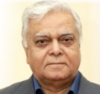 Dr. Charudatta Mayee, Ph.D is a distinguished Indian agricultural scientist and administrator with over five decades of contributions to Indian agriculture. Dr. Mayee currently serves as Adjunct Professor at IARI, New Delhi, and several ICAR institutions and universities. Dr Mayee served as Vice Chancellor of MAU Parbhani, Director of the Central Institute for Cotton Research (ICAR-CICR), Nagpur, and Agriculture Commissioner for the Government of India. Dr Mayee served as Vice President of the National Academy of Agricultural Sciences (NAAS) India. Dr. C.D. Mayee has received numerous accolades spanning five decades, recognizing his transformative contributions to agricultural science. He is an Alexander von Humboldt Fellow and has received lifetime achievement awards from multiple institutions. His early career was marked by the Prof. M.J. Narasimhan Academic Award (1974) and V.P. Gokhale Award (1998), followed by national honors like the Vasantrao Naik Krishi Award (2002), ICAR Outstanding Team Research Award (2003), and Dr. B. Vishwanath Award (2005). He received Lifetime Achievement Awards from the Indian Society for Cotton Improvement (2008), National Academy of Agricultural Sciences (2011), and Indian Phytopathological Society (2017), among others. Four universities conferred Honorary Doctorates (D.Sc.) for his pioneering work (2009–2023). Recent distinctions include the Best Cotton Scientist Award (2022, Cotton Association of India), Krishi Maharshi for Cotton R&D (2024) and the winner of the ICAC Researcher of the Year Award 2025.
 Dr. Khalid Mahmood is the Co-Founder of SAWiE, where he has been instrumental in developing digital farm advisory and farm data platforms supporting over 10,000 farmers in Pakistan, improving traceability and transparency across agricultural supply chains. He is leading the development of first-mile traceability systems and the TRUE Cotton platform, connecting farmers with sustainable global textile supply chains.
 Dr Olivier Zieschank studied Management at the university of Lausanne, where he graduated in 2005. Until 2010, he worked in a Swiss-based start-up that specialized in negotiating cell tower lease agreements, where he became associate director. In 2010, he returned to university and studied applied economics in Neuchatel, Switzerland. He wrote his PhD in Economics at the University of Freiberg, Germany, where he developed a theory of organization. Mr Zieschank was appointed Economist at the ITMF in August 2017 and became director in January 2021.
 Ashwin Chandran holds a Bachelors Degree in Textile Technology from UMIST, UK and a Masters degree in Business Administration from the University of Illinois, USA.
 Mr. Shreyans Gupta is an officer of the Indian Revenue Service (IRS), currently serving as First Secretary at the Embassy of India in Washington D.C. In his current role, he oversees critical portfolios within the Income-tax Overseas Unit (ITOU) and the Commerce Wing, facilitating bilateral and multilateral cooperation.
 Eric Trachtenberg is the Executive Director of the International Cotton Advisory Committee (ICAC).
 Pia Terasa joined the textile machinery manufacturer Saurer over 25 years ago. She is responsible for marketing and communications at the group level. Coming originally from a non-textile background, market intelligence and business development have played major roles throughout her career. Her current main “hobby” is closely monitoring development of the textile recycling industry and circular economy.
 Dr. Md. Fakhre Alam Ibne Tabib is the former Executive Director of the Cotton Development Board of Bangladesh, with over 32 years of experience in cotton production, research, and development. He has demonstrated strong leadership and communication skills in engaging with national and international stakeholders in the cotton sector.
 Dr. Elsie Sia Kanza is the current Ambassador Extraordinary and Plenipotentiary of the United Republic of Tanzania to the United States of America and Mexico. Prior to that role, Ambassador Kanza served as Special Advisor to the President of the World Economic Forum, and, before that, Head of Africa and Member of Executive Committee for 10 years championing growth and development in Africa leveraging public private collaboration. In 2015, She was awarded a Doctorate in Business Administration (honoris causa) by the University of Strathclyde for the transformative impact achieved in Africa.
 Alison Ward has over 30 years of international experience in sustainability and corporate affairs. Alison is the CEO of CottonConnect, where she leads a team of over 100 employees, impacting the lives of over 800,000 cotton farmers in India, China, Pakistan, Turkey, Egypt and Bangladesh. Under Alison’s leadership the organization: drives supply chain transparency connecting sustainable fibres from farm to store; focuses on the rights and skills of women in supply chains through pioneering gender programmes; and continues to develop innovations at a farm level. She leads cotton strategies and programmes for global brands and retailers.


 Name: Mary Concilia Anchang
 Besim Özek
 SIDDHARTHA RAJAGOPAL, Executive Director – TEXPROCIL